

What is success? That question sounds simple, but it can mess with your head fast.
Some people hear what is success and picture making money, fame, or a slick office with cold brew on tap. Others picture peace, strong health, meaningful work, and time to eat dinner without staring at email.
For entrepreneurs, the question hits even harder. You are building something from scratch, betting on yourself, and trying to grow without losing your mind in the process.
That is why defining success matters so much. You need a personal definition that fits your core values, your business model, and the kind of personal life you want to protect.
If you skip that step, you can win on paper and still feel off. Plenty of founders achieve goals, hit revenue targets, and still wonder why the victory feels flat.
This guide answers what is success in a practical way. It looks at mindset, money, health, long-term goals, and the business systems that help you measure success with more honesty.
For a startup, success is part mindset, part action, and part measurement. It is also tied to how well your business turns interest into trust, and trust into customers.
That is where landing pages come in. They look simple, but they often shape whether your traffic becomes growth or just a pretty analytics chart.
Table Of Contents:

- What Is Success, Really?
- Why Entrepreneurs Need Their Own Definition of Success
- The Inner Drivers Behind Real Success
- Success Is Not Just Money, But Money Still Counts
- Success Also Includes Health, Meaning, and Support
- What Business Success Looks Like in the Early Stages
- Why Landing Pages Matter More Than Many Founders Think
- The Three Benchmarks That Gauge Landing Page Success
- How to Build a Landing Page That Supports Real Success
- Examples of Success That Break the Old Mold
- How to Define Success for Yourself Without Fooling Yourself
- Conclusion
What Is Success, Really?
At the most basic level, success means getting the result you wanted. In plain terms, the success noun points to a desired outcome or favorable result.
That sounds neat, but real life is not neat. One person may define success as career success, while another may see true success as work-life balance, strong relationships, and the ability to feel fulfilled.
That is why people define success differently. Your outside results matter, but your inside experience matters too.
The outside score includes things other people can spot, such as a college degree, financial success, reaching milestones, or building a roaring success in business. The inside score includes peace of mind, self-respect, energy, and whether your day-to-day life feels worth living.
Your view success takes can also shift over time. At one stage, your starting point may be paying bills on time, while later you may care more about freedom, contribution, or a great personal sense of meaning.
At 22, success may look like speed and momentum. At 42, it may look like stable revenue, fewer emergencies, and a successful life that leaves room for sleep and family.
Neither version is wrong. The problem starts when you pursue success based on someone else’s definition instead of your own values.
Why Entrepreneurs Need Their Own Definition of Success
Startups are loud. Between podcasts, social media, and endless hot takes, it is easy to absorb opinions expressed by people whose goals have nothing to do with yours.
That noise can pull you away from what matters. You start chasing optics instead of outcomes and copy a success story that does not fit your life.
Some founders want a fast exit. Some want a steady company with strong margins and low chaos.
Some want to be positively impacting their industry. Others want enough cash flow to buy back their time and protect their personal life.
All of those can count as success. The trouble begins when you borrow else’s definition and mistake it for your own.
A thoughtful founder will define success early by asking a few direct questions.
- What kind of life do I want this business to support?
- What kind of customers do I want to serve?
- What long-term success actually looks good to me?
- What am I willing to trade for growth?
- What am I not willing to trade?
That last question matters a lot. If growth wrecks your health, relationships, or focus, the win gets expensive fast.
Many people think they want the seemingly perfect lives they see online. In reality, those seemingly perfect snapshots often hide stress, burnout, debt, or isolation.
The Inner Drivers Behind Real Success
Mindset talk can get cheesy in a hurry. Still, some mental habits really do help people achieve success over time.
One big factor is self-belief. If you trust your ability to solve problems, recover from mistakes, and keep moving, you are more likely to stick with the hard work that progress requires.
That matters because success is rarely one big leap. It is usually a long string of decisions, experiments, setbacks, and course corrections.
Another factor is how you explain setbacks to yourself. People with a growth mindset are more likely to treat mistakes as feedback, while people with a fixed mindset often treat them as proof they are not good enough.
That shift matters in business. If a product launch falls flat, a growth mindset asks what changed, what failed, and what to test next.
Support matters too. A strong support network helps you recover faster, think more clearly, and stay grounded during stressful seasons.
That network may include family, friends, mentors, peers, therapists, or career services. No founder wins alone for very long.
Success Is Not Just Money, But Money Still Counts
It is easy to act like money does not matter. That sounds wise until payroll, rent, and taxes show up.
Money is not the full picture of success, but it is still a major success factor in both business and daily life. Financial success creates stability, options, and the ability to keep going when things get rough.
The better view is simple. Money is a tool, not the full trophy.
Making money can support freedom, reduce stress, and fund better systems. It can also help you hire well, improve your product, and spend time on strategy instead of constant panic.
Still, amassing wealth by itself does not always lead people to feel fulfilled. Plenty of people achieve specific targets and then realize they built a life they do not enjoy.
That is why your personal definition matters. If your business hits seven figures but destroys your health and work-life balance, that result may look impressive while feeling empty.
Career success works the same way. A title, a raise, or even a gold medal level achievement may impress other people, but only you can decide whether the trade was worth it.
Success Also Includes Health, Meaning, and Support
Grinding all day and calling it success is getting old. More people now see that nonstop pressure has a cost.
Health is not separate from success. It helps achieve steady performance, better judgment, and stronger relationships over time.
If you are tired all the time, snapping at people, and losing your ability to focus, your business will feel it. So will your home life.
Meaning matters too. Many people want their work to connect with their core values and leave them contributing positively to other people.
That does not mean every founder must start a charity or save the planet. It does mean your work feels better when it lines up with something you actually care about.
Support plays a huge role here. Friends, family, mentors, and peers can help you process stress, make better choices, and stay resilient.
If your business makes you rich in invoices but poor in energy, that is a bad trade. If it isolates you from people you love, the math gets ugly fast.
Success is not just output. It is also whether your life still feels human while you are building.
What Business Success Looks Like in the Early Stages
For a new business, success is rarely one giant breakthrough. It is a stack of smaller wins that start to compound.
At first, success may look like this.
- A clear offer people understand.
- Steady traffic from the right audience.
- Visitors who join your list or ask for a call.
- Sales that arrive without begging every lead.
- A repeatable process you can improve each month.
- A clear success rate for offers, calls, and follow-up.
Notice what is missing from that list. Vanity numbers that look good and pay nothing.
A founder can get likes, views, and comments all day on social media. But if nobody takes action, the business still has a problem.
Early-stage founders should set goals that are crystal clear and easy to review. Good targets often beat vague ambition.
That is why many teams use smart goals. They help you define success in a way that is specific, trackable, and tied to a real desired outcome.
| Area | Weak Goal | Better Goal |
|---|---|---|
| Traffic | Get more visitors | Increase qualified traffic by 20% in 90 days |
| Leads | Get more leads | Generate 30 qualified leads per month |
| Sales | Make more sales | Convert 15% of qualified leads into customers |
| Lifestyle | Have more balance | Keep two work-free evenings each week |
Why Landing Pages Matter More Than Many Founders Think
Landing pages are not flashy. Most people do not brag about them the way they brag about logos or brand colors.
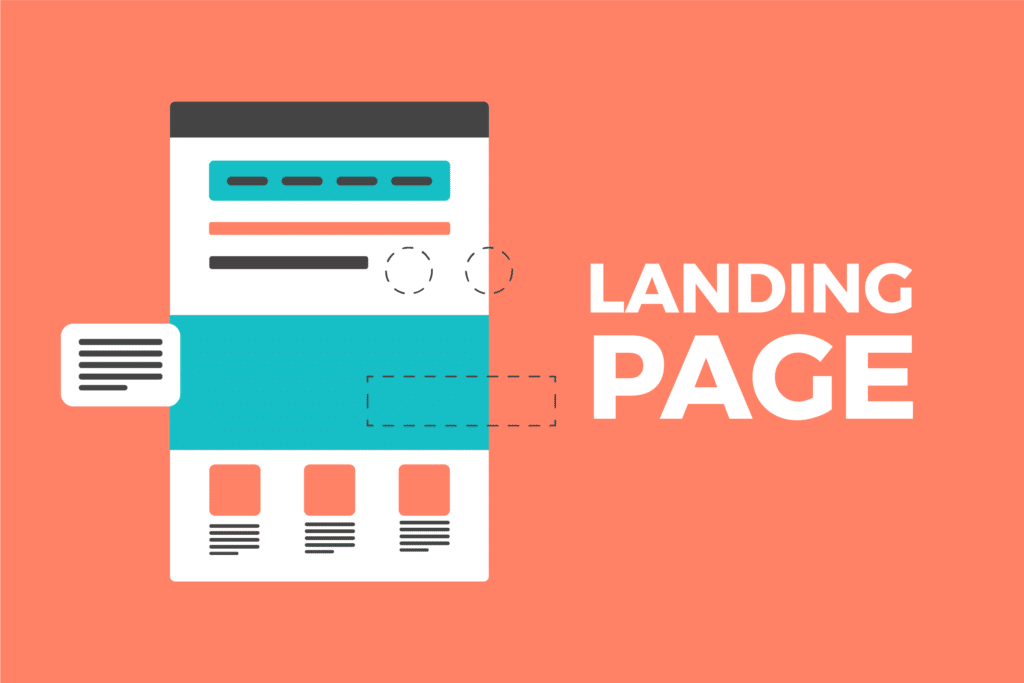
But landing pages do one job that matters a lot. They guide a visitor toward one clear action.
A strong landing page takes a visitor from curious to committed. It cuts noise, matches the message that brought the visitor in, and makes the next step obvious.
That focus matters because too many choices often kill momentum. Confused visitors rarely convert.
Strong landing pages also make your marketing more efficient over time. If more visitors act, every click becomes more valuable.
This is one of the easiest ways to improve business performance without buying more traffic. Sometimes the answer is not more attention, but better conversion from the attention you already have.
If success in business means steady progress, then conversion systems matter. A landing page may look small, but it can be a critical success factor in whether your campaigns produce revenue.
The Three Benchmarks That Gauge Landing Page Success
If you want a cleaner way to measure success in marketing, start with three numbers. They give you a more honest picture than vanity metrics ever will.
1. CTA Click Through Rate
This tracks how many people click from the first call to action into your landing page flow. It shows whether your message creates enough interest for the next step.
If the rate is low, your pitch may be unclear, your button may be weak, or your offer may not sound useful. People rarely click on something they do not understand.
Message match matters here too. If your ad promises one thing and the page delivers another, trust drops fast.
2. Visitor to Lead Conversion Rate
This measures how many visitors become leads after they land on the page. It shows whether your copy, layout, form, and offer actually move people to act.
If people arrive but do not sign up, something is off. You may be asking for too much information, offering too little value, or creating friction that kills momentum.
This is where testing helps achieve better results. Small changes to a headline, form length, proof, or page flow can improve outcomes a lot.
3. Lead to Customer Conversion Rate
This is the metric many founders miss. Leads feel exciting, but customers pay the bills.
This number tells you whether your page attracts serious buyers or casual browsers. It also helps you compare channels and see which offers bring in the right people.
If one page gets fewer leads but more sales, that page may be your real winner. Pretty volume means little without revenue.
| Benchmark | What It Measures | Why It Matters |
|---|---|---|
| CTA Click Through Rate | Interest in your message | Shows if your first pitch earns attention |
| Visitor to Lead Conversion Rate | Lead capture performance | Shows if your page convinces people to act |
| Lead to Customer Conversion Rate | Sales quality | Shows if your offer attracts buyers |
These three numbers connect your idea of success to actual business results. They also act as a practical success measure, not just a feel-good report.
If you want a simpler dashboard, treat each one as a critical success factor. Together, they tell you whether your marketing attracts attention, builds trust, and closes business.
How to Build a Landing Page That Supports Real Success
You do not need tricks. You need focus and a specific goal.
A landing page works best when it sticks to one job. One audience, one promise, and one action.
Here are a few smart rules.
- Write a headline that says what the visitor gets.
- Keep the offer close to the message that brought them in.
- Use one main call to action.
- Cut distractions that pull attention away.
- Ask only for the information you truly need.
- Add proof that builds trust.
- Test page changes one at a time.
If your regular site menu pulls people into five side paths, remove it on landing pages. Focus beats clutter almost every time.
You are not building a museum. You are guiding a decision and trying to achieve specific action.
This is also where honest review helps. Do not forget to check what happens after the lead comes in, because page success and sales success are linked.
Examples of Success That Break the Old Mold
Success has many faces, and some of the best examples are not about speed or flash. They are about alignment between values, action, and outcome.
Patagonia built a brand tied to environmental commitment, not just product sales. That showed how a company can define success in a way that includes profit and purpose.
Oprah Winfrey’s path is another reminder that success can change. A person may start with one goal and later care more about service, meaning, or positively impacting others.
Even the big wins people admire often took years of hard work behind the scenes. The final result may look sudden, but the process usually was not.
That matters because many founders compare their middle to someone else’s highlight reel. If your growth is slower than expected, that does not mean success isn’t happening.
Sometimes success differently means choosing steadiness over hype. Sometimes it means building a business that quietly funds your family, supports your health, and gives you time to spend time where it counts.
How to Define Success for Yourself Without Fooling Yourself
This part takes honesty. No performance, no posing, and no borrowed wisdom pasted over your real life.
Ask yourself what success means in this season. Right now, not ten years ago, and not according to strangers online.
Start with three buckets.
- Personal success.
- Business success.
- Relationship and health success.
Then add metrics to each one. If you cannot measure success at all, it is easy to stay vague and call that progress.
Your list might look like this.
- Personal: Seven hours of sleep and two phone-free evenings each week.
- Business: Twenty qualified leads per month and three new clients.
- Health and relationships: A daily walk and one dinner each week with no work talk.
From there, review your goals once a month. Ask what is working, what feels forced, and what needs to change.
This keeps your personal definition active instead of theoretical. It also helps you visualize success in practical terms, rather than waiting for some vague future feeling.
If your goals are too broad, tighten them. A crystal clear target is easier to follow than a nice-sounding wish.
You do not need a learner’s dictionary explanation of success every week. You need a living definition that matches your values, helps achieve progress, and keeps you honest about what kind of life you are building.
If your goals stop fitting, change them. Success change is normal as people grow, and a wise founder adjusts instead of pretending the old script still works.

Conclusion
So, what is success? It is getting results that matter to you while building a life you can actually enjoy living.
For founders, what is success goes far beyond applause, vanity metrics, or making money alone. It includes purpose, resilience, financial health, good relationships, steady habits, and business systems that turn interest into customers.
That is why it helps to define success with care. When your goals match your core values, you make better decisions, protect your energy, and build a version of success that lasts.
Landing pages fit into that picture more than many people think. If you track click through rate, visitor to lead conversion, and lead to customer conversion, you get a sharper way to measure success and improve what matters.
In the end, true success is not copying someone with seemingly perfect lives online. It is choosing your own standard, setting long-term goals that fit your life, and taking steady action that helps you achieve success on your terms.
If you want more smart ideas for startup growth, visit BizWhisperer.org. Browse practical business tips, useful insights, and strategies for building a business that works for you, not against you.